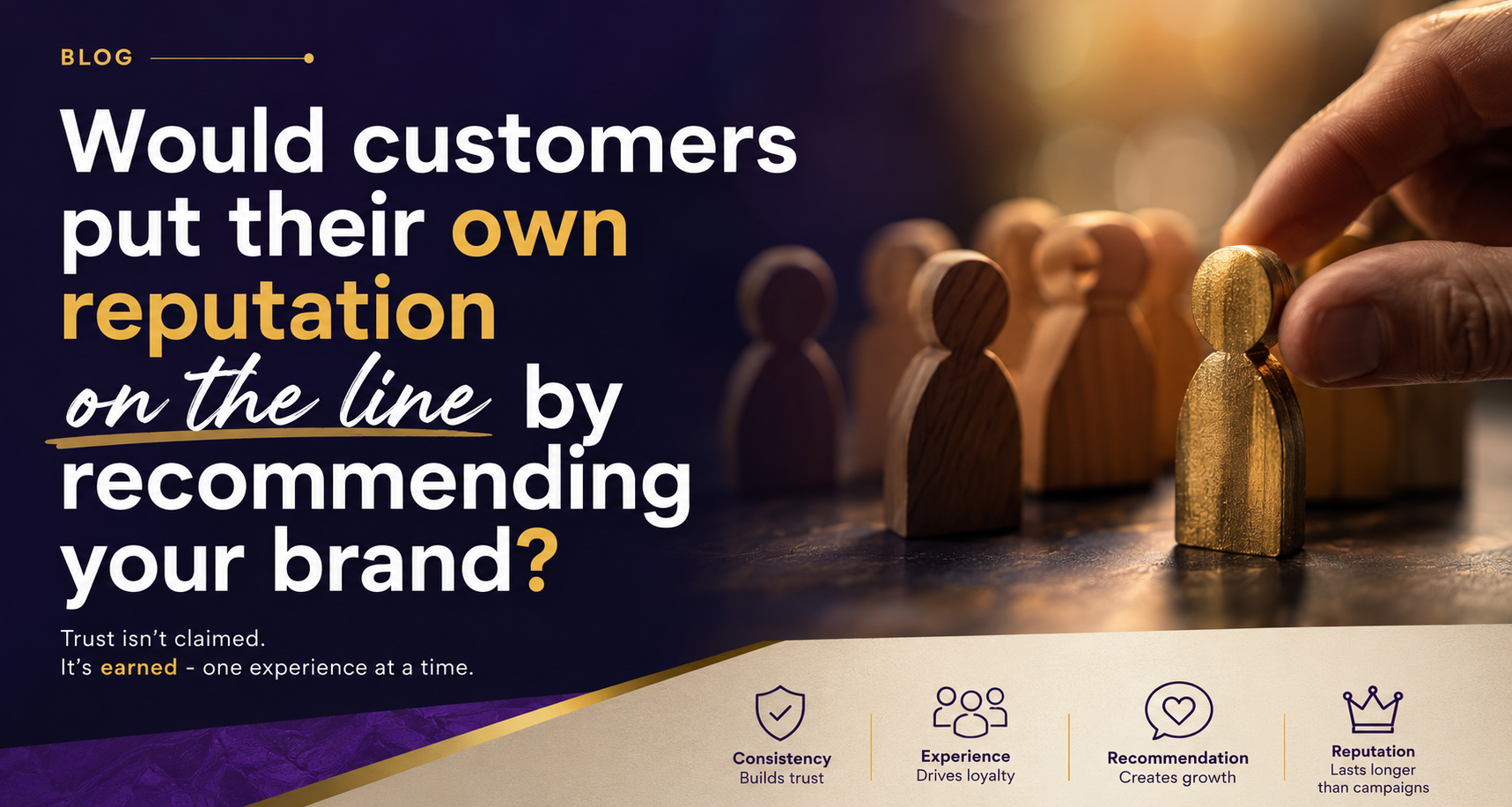
Would customers put their own reputation on the line by recommending your brand?
I actually think this is one of the most important marketing studies to come out of South Africa this year—not because it tells us who has the biggest advertising budgets, but because it measures something far more valuable:
Would customers put their own reputation on the line by recommending your brand?
According to KLA and YouGov, these rankings are based on recommendations from existing customers, not awareness, market share or advertising spend. That’s a much harder metric to fake because it reflects trust built over time.
For entrepreneurs, there are some powerful lessons.
1. They don’t compete on price. They compete on confidence.
Look at the list:
- Woolworths
- Samsung
- FNB
- Investec
- Cape Union Mart
- Checkers
- Clicks
These companies aren’t the cheapest.
They’re the brands people feel safe recommending.
People don’t recommend products.
They recommend experiences.
When someone recommends a business, they’re effectively saying:
“I’m willing to stake my reputation on this company.”
That only happens when expectations are consistently met.
2. Consistency beats clever marketing
Every brand on this list delivers a remarkably consistent experience.
Think about Woolworths.
You know what to expect before you walk in.
The store looks familiar.
The staff behave similarly.
The packaging feels premium.
The quality is predictable.
Customers don’t have to wonder.
Consistency removes risk.
3. They own one clear position
Notice how each brand owns a space in your mind.
Woolworths
Premium quality.
Samsung
Innovation.
Cape Union Mart
Outdoor expertise.
Clicks
Health, beauty and convenience.
FNB
Innovation and digital banking.
Checkers
Convenience and value through initiatives like Sixty60.
None of them tries to be everything to everyone.
Strong brands make it easy for customers to explain them in one sentence.
4. Customer experience is marketing
This ranking wasn’t created by advertising.
Millions of customer interactions created it.
Advertising might get someone through the door once.
Experience determines whether they tell ten friends.
As Rakhee Naik from KLA notes, recommendation is one of the few brand metrics that can’t simply be bought—it’s earned through experiences worth talking about.
5. Trust compounds
Recommendation works like compound interest.
One delighted customer tells three people.
Three customers tell nine.
Nine tell twenty-seven.
Eventually the market starts selling your business for you.
The opposite is also true.
One poor experience spreads surprisingly quickly.
6. Their brands are bigger than their products
Why does Woolworths appear three times?
Because people trust the brand itself.
That trust transfers.
Food.
Clothing.
Home.
The brand becomes a shortcut for quality.
That’s one of the biggest goals of branding.
7. They invest in systems, not heroics
Customers don’t see internal processes.
They see outcomes.
These businesses have invested heavily in systems that make good service repeatable.
Entrepreneurs often rely on working harder.
Successful brands rely on making excellence repeatable.
8. They understand emotional value
People remember how brands make them feel.
Safe.
Proud.
Looked after.
Understood.
Convenient.
Emotion drives recommendation more than features.
9. Every touchpoint matters
These brands don’t only focus on advertising.
They consider:
- Packaging
- Website
- Staff
- Social media
- Store environment
- Returns process
- Customer service
- Mobile apps
- Email communication
Brand isn’t the logo.
Brand is the experience.
10. Reputation is now the strongest form of marketing
The biggest lesson is this:
The future belongs to businesses that create conversations.
Marketing gets attention.
Service earns recommendation.
Recommendation creates growth.
What entrepreneurs should ask themselves?
Instead of asking:
“How do I get more customers?”
Ask:
- Would my current customers recommend me?
- Is my service consistent every time?
- Could someone describe my brand in one sentence?
- What experience do people remember after dealing with us?
- Are we building transactions or relationships?
- Are we investing more in advertising than customer experience?
- If my customers became my sales team tomorrow, what would they say?
The strategic takeaway
As a marketing agency, this research reinforces something we’ve believed for years at Word on the Street Media:
Branding isn’t about looking bigger than you are. It’s about becoming so consistently valuable that your customers choose to become your marketers.
The companies on this list haven’t earned their positions because they have the biggest advertising budgets. (They more than likely do have large budgets, but any budget is relative to income, isn’t it?) They’ve earned them because they consistently deliver experiences people are happy to recommend.
That’s the difference between being known and being trusted—and in today’s market, trust is the more valuable asset.